Swing to Web today

Modernize at your own pace

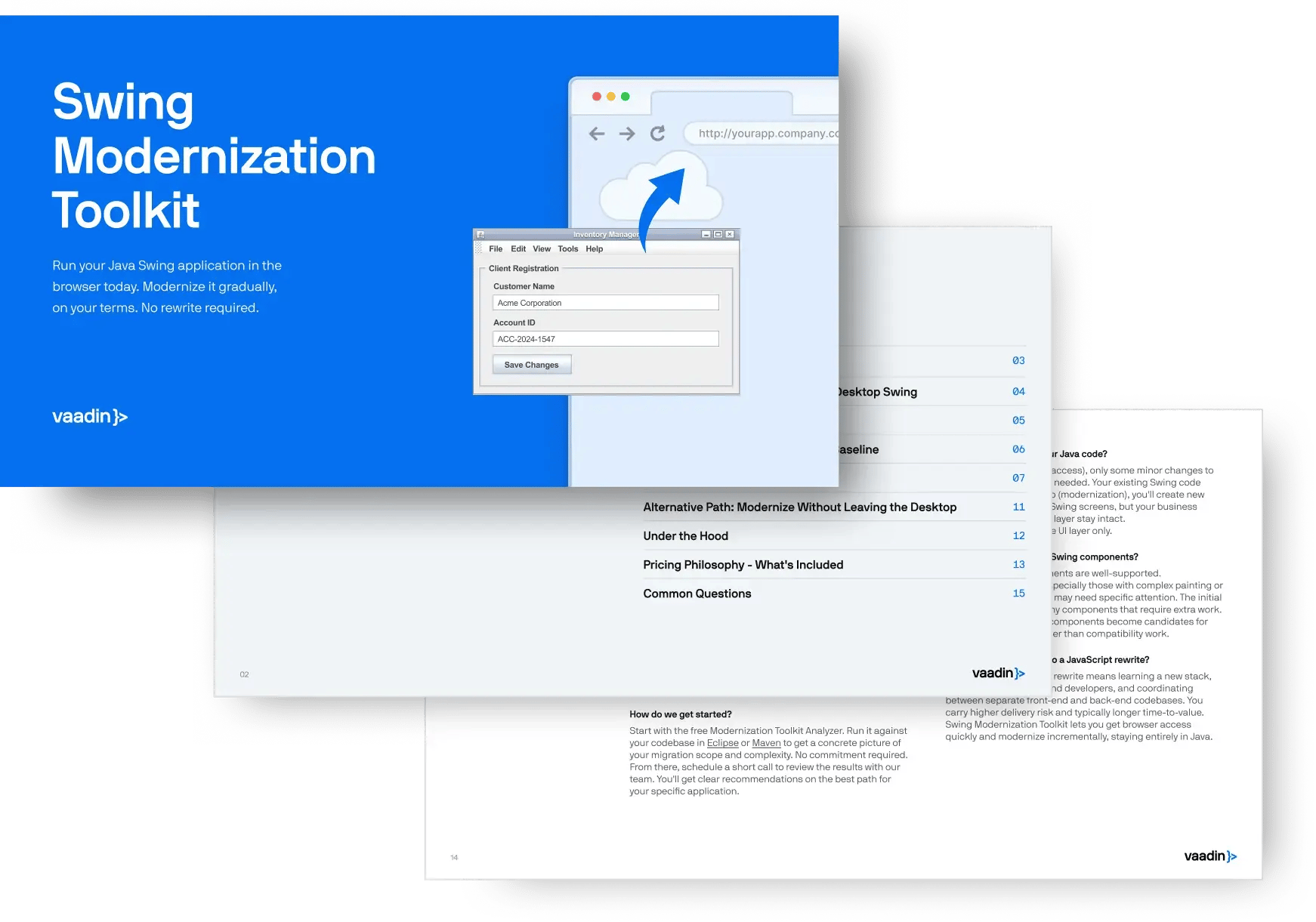
Run your existing Java Swing app in the browser without a risky big-bang rewrite. Modernize view by view, reusing your Java code and team. No JavaScript required.
Why move away from Swing

Your Swing applications still do the job. The pressure to change is coming from everything around them.
Slow delivery

Every change is heavy, slowing down your roadmap and time-to-market.

End-user expectations

Customers and users expect web-based, mobile-friendly interfaces — not desktop clients and installers.

Hiring and retention risk

Developers with Swing experience are rare, and your best people want to work on modern technologies.

Operational overhead

Packaging, desktop installs, per-machine updates, and scaling constraints all add cost and complexity.

Strategic risk

The longer you stay on Swing, the harder and more expensive future changes become.

From Swing to web, without a rewrite

The path from desktop to modern web is simple and straightforward:

  1. Today:
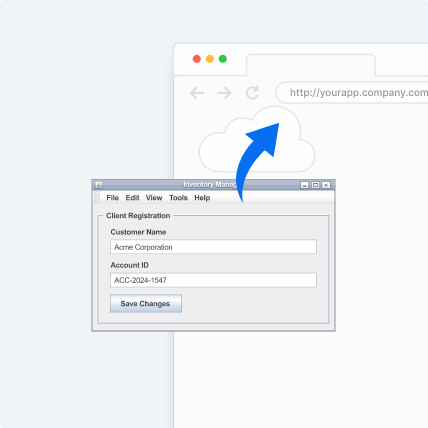
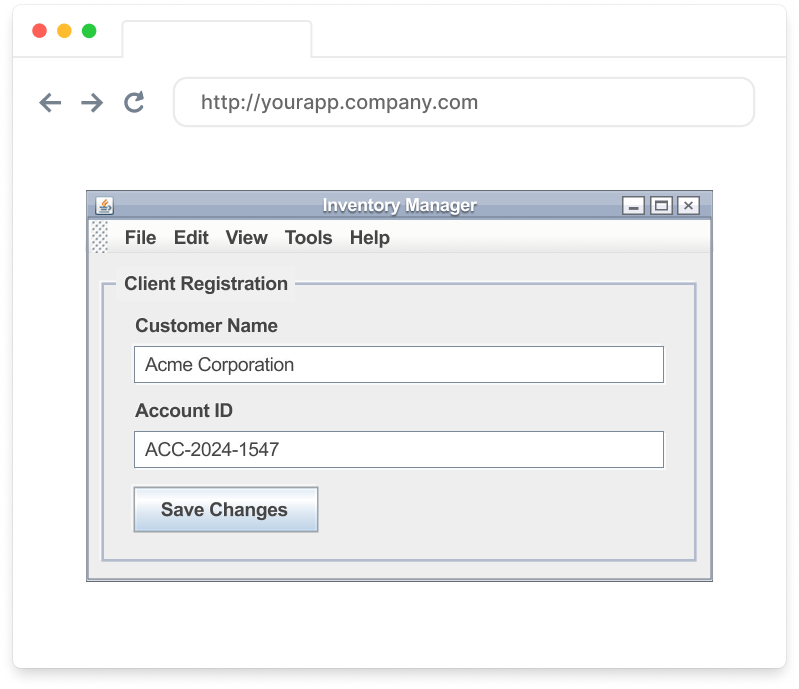
    Run your existing Swing app in the browser as-is, so users access it like any web app. No local installs, no Java on the desktop.
  2. Tomorrow:
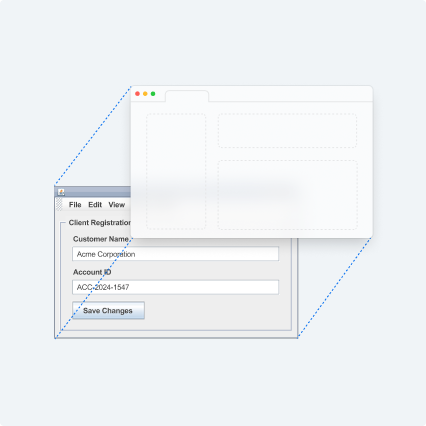
    Start modernizing view by view into a Java-based web UI, reusing your existing business logic and Java developers instead of funding a risky full rewrite.


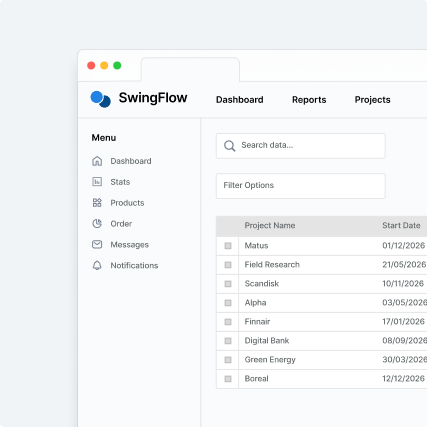
The end result: your old Swing application evolves into a modern web application, without the cost and risk of a full, one-shot rewrite.

  1. De-risk modernization
    Move to a browser-based UI without freezing development or betting everything on a multi-year rewrite. Modernize incrementally while the business keeps running.
  2. Lower total cost
    Reuse existing Java code and domain logic instead of rebuilding from scratch. Avoid the hidden costs of parallel systems, temporary workarounds, and failed rewrite attempts.
  3. Use the team you already have
    Keep everything in Java. Your current developers can build modern web UIs without becoming JavaScript experts or hiring a separate frontend team.
  4. Simpler operations
    Deploy once, access from anywhere. No more packaging desktop clients, handling per-machine updates, or dealing with Java installs on user devices.

How it works

A practical three-step path from Java  Swing to the web without a big-bang rewrite.
Lift your Swing app into the browser

Your existing Java Swing application runs inside a browser-based container, without code changes. Users log in through a URL like any other web app.

Start modernizing view by view

Gradually replace Swing screens with new views built entirely in Java, reusing your existing business logic and integrations.

Evolve into a fully modern web app

Over time, more of the UI moves to the new web layer until Swing is no longer needed. No big-bang cutover and no parallel rewrite project.

What you’ll get

Swing to Web is subscription-based. You only pay while your Swing application is running in the browser. Once you’ve fully migrated to a modern web UI, you can end the subscription.

Key capabilities

  • Run your existing Java Swing application in the browser
  • Add new web-based views built in Java with Vaadin, alongside existing Swing UI
  • Automatically migrate Swing views and workflows to a modern web stack
  • Use drop-in implementations for common Swing/AWT behaviors so the app works well on the web and supports embedded Vaadin views

Included in your subscription

  • Support credits (80) for expert help and guidance
  • Hotfixes when you need them
  • Expert chat for quick questions
  • Optional add-on: Vaadin Foundations consulting

Let’s map your path from Swing to web

Tell us a bit about your Swing app. We’ll follow up to understand your setup and what “success” looks like, then recommend the best next step.

  1. Send the form
  2. We’ll schedule a short call to review your app and requirements
  3. You get a recommended approach and pilot plan


No commitment. You decide whether to proceed.