
Learn how Dynasoft AG migrated a decades-old Oracle Forms ERP system to a modern Spring Boot and Vaadin Flow stack while preserving its database-driven business logic.
The company
Dynasoft AG is a Swiss software company that builds and maintains a comprehensive ERP system called Tosca covering sales, production, logistics, CRM,E-Commerce and finance. The platform serves dozens of customers, primarily across Switzerland and Germany. For more than 30 years, the system ran on Oracle Forms, with much of its business logic deeply embedded in an Oracle database through PL/SQL.
The challenge: Modernizing a 30-year-old ERP without rewriting the business layer
Oracle Forms had served Dynasoft well for decades, but the technology had long since stopped feeling modern. While existing customers were largely content with a stable, well-running system, the dated user interface had become a real obstacle to growth. As Kaspar Walter, Lead of Engineering at Dynasoft, explained, the company repeatedly struggled to win new business when prospects saw the legacy Oracle Forms UI. A steady pipeline of new clients was essential to keep the business growing, and the aging interface was working against that goal.
The deeper challenge was architectural. Three decades of development had concentrated enormous amounts of logic inside the Oracle database, and even the Oracle Forms files themselves contained substantial PL/SQL triggers and UI logic intertwined with business rules. Any modernization path had to respect that reality. With a lean team whose strength was PL/SQL rather than Java, a full rewrite of the business layer into Java was neither practical nor affordable.
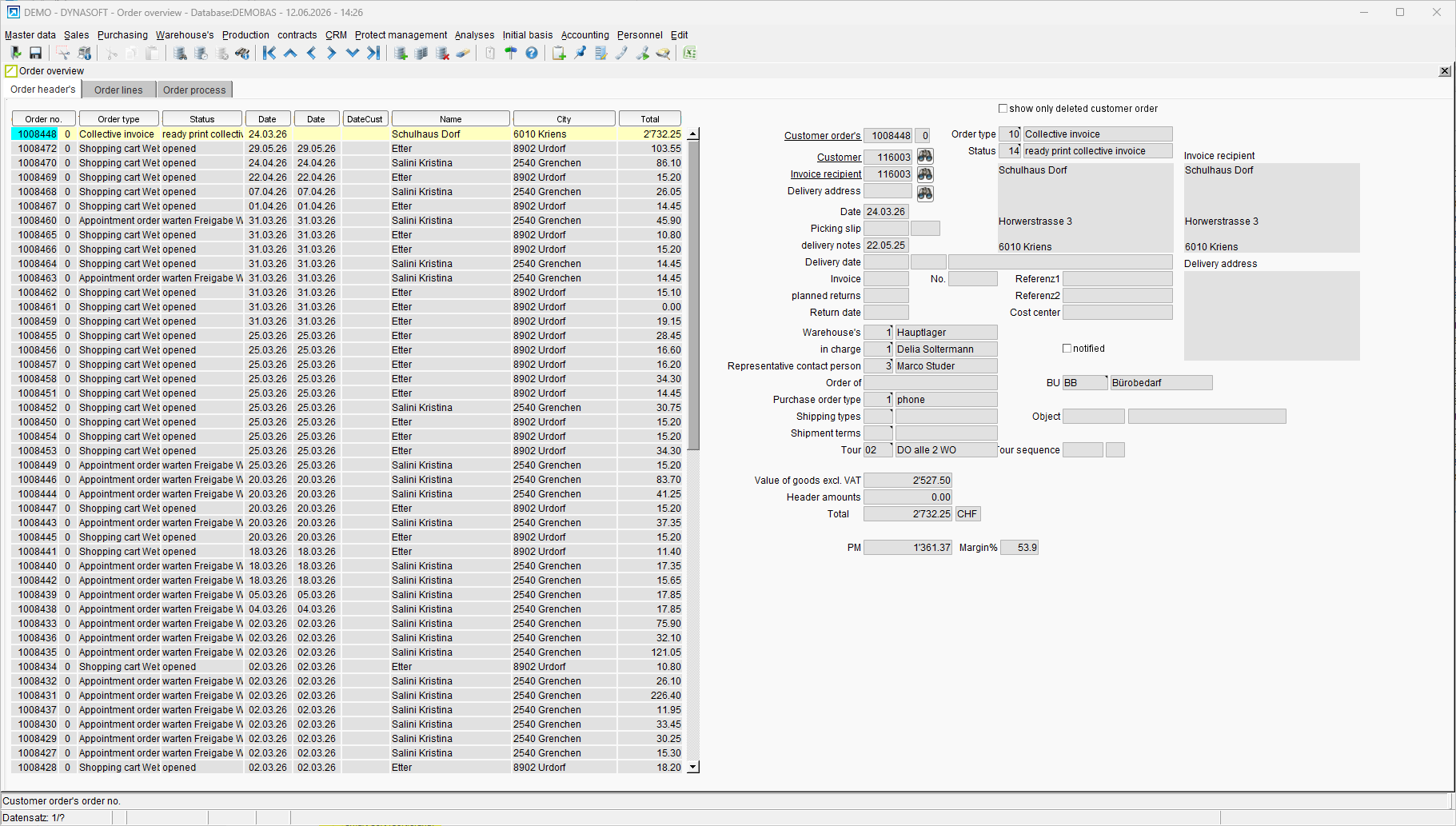
The original Oracle Forms version of Dynasoft's Tosca ERP before modernization with Spring Boot and Vaadin Flow.
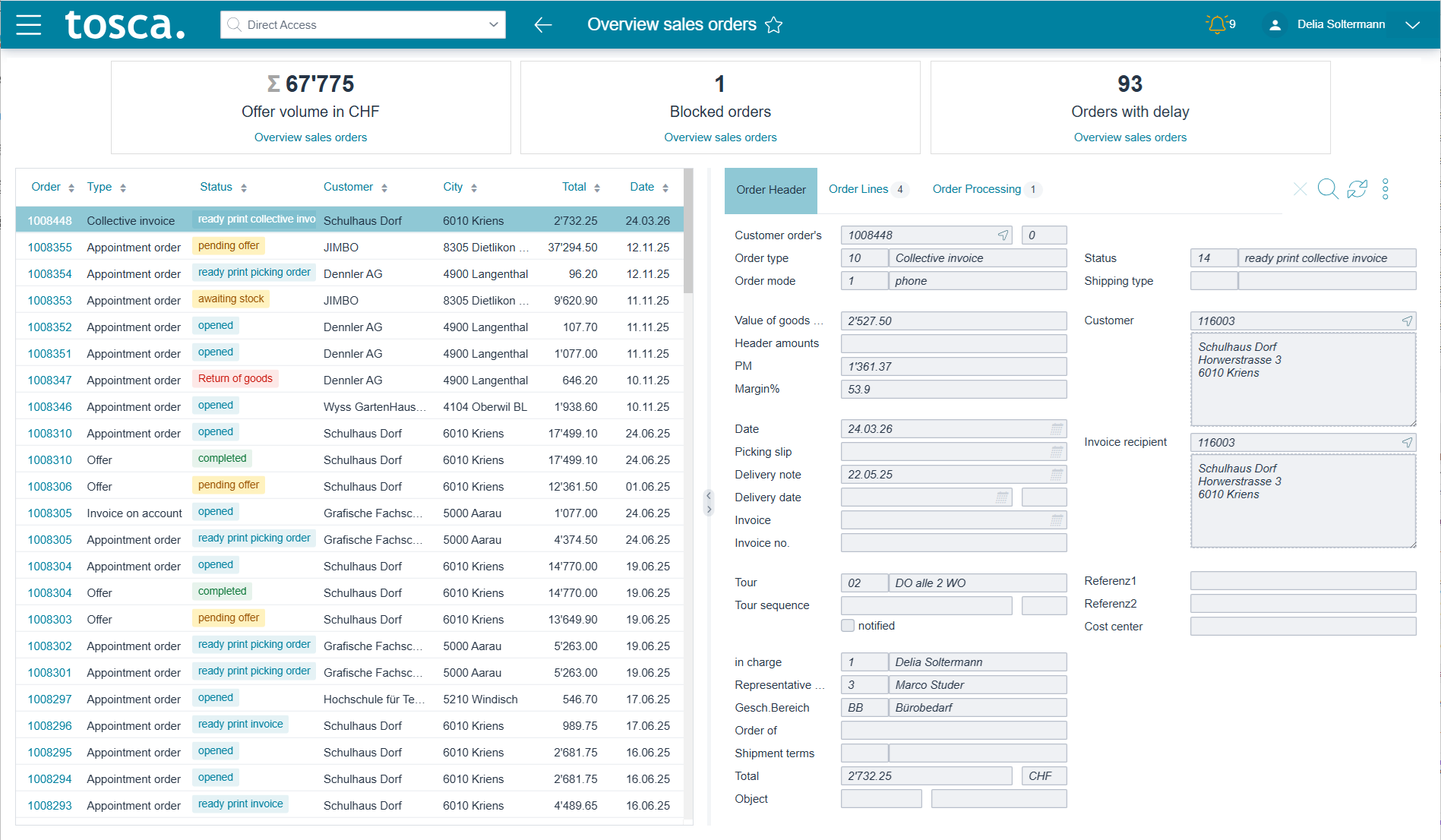
The modernized Tosca Web ERP built with Spring Boot and Vaadin Flow, preserving existing PL/SQL business logic while delivering a modern web experience.
The solution: Preserving PL/SQL logic while modernizing the UX
Dynasoft evaluated several modernization routes, including GWT-based options and Oracle APEX. APEX was a serious contender, but it was ruled out due to its limited UI flexibility combined with the company's need to customize the interface freely. A third-party APEX UI layer was also considered and, fortunately, avoided; the vendor behind it was later acquired and the product discontinued.
The turning point came through a partner experienced in migrating legacy applications to Swing and Vaadin. Rather than relying on an intermediate UI-building engine, they chose building the framework directly on Spring Boot and Vaadin Flow, with jOOQ as the database access layer.
The team's strategy mirrored a pattern from Oracle Forms' module designer: drive the UI from definitions stored in the database. They wrote a Java tool to extract PL/SQL blocks and entities from the Oracle Forms files into database tables, then generated Vaadin-ready module design definitions from the scraped grids, blocks, and items. A custom PL/SQL parser converted the old Forms syntax into the form the new framework needed. Crucially, this approach let Dynasoft keep its business and UI logic in the database — recreating familiar Forms events such as pre-save and post-record-select so that developers could continue working in the model they knew, while the Vaadin framework handled rendering and interaction.
The result is a system where the UI is generated on the fly from database definitions, enriched with Spring Expression Language for show/hide rules, and able to trigger either Java or migrated PL/SQL package code per module.
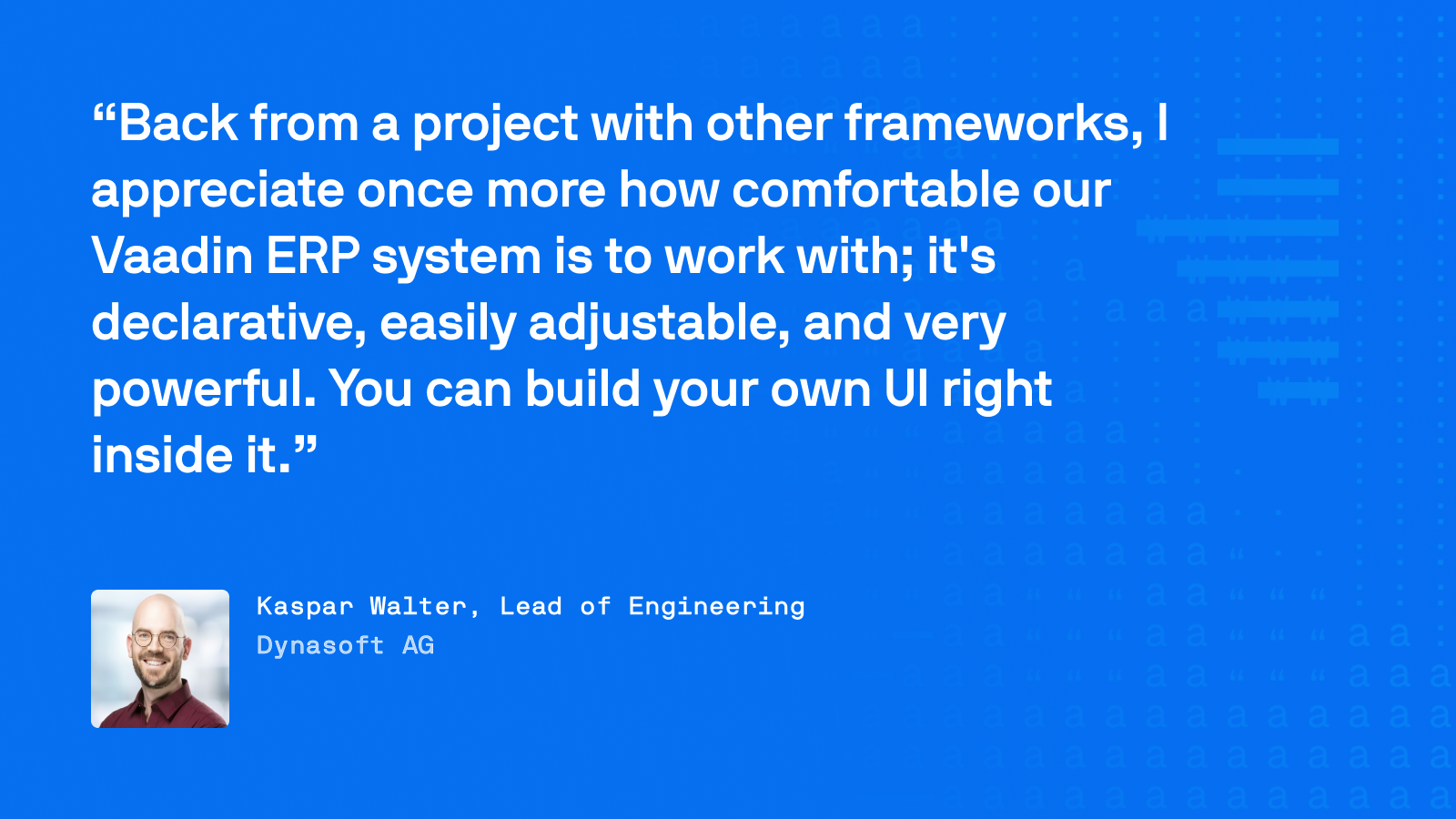
The result: From Oracle Forms to a modern ERP platform
The journey was substantial: roughly seven years overall, with the first two to three years devoted to building the framework and establishing patterns, across approximately 450 modules. Today, Dynasoft has migrated and verified more than 90% of its modules. One of its largest customers has been running the new system, the Tosca Web ERP, productively for over a year. Additionally, they laid the foundation for cloud based Tosca as well as implement modern devops processes.
Looking back, Walter is candid about the lessons learned. The team replicated nearly everything Oracle Forms could do, which made the framework more complex than it needed to be; with hindsight, a more tightly scoped framework and fewer custom components would have delivered more stability. Quality control including hundreds of integration tests run daily remained the true bottleneck rather than the migration mechanics themselves.
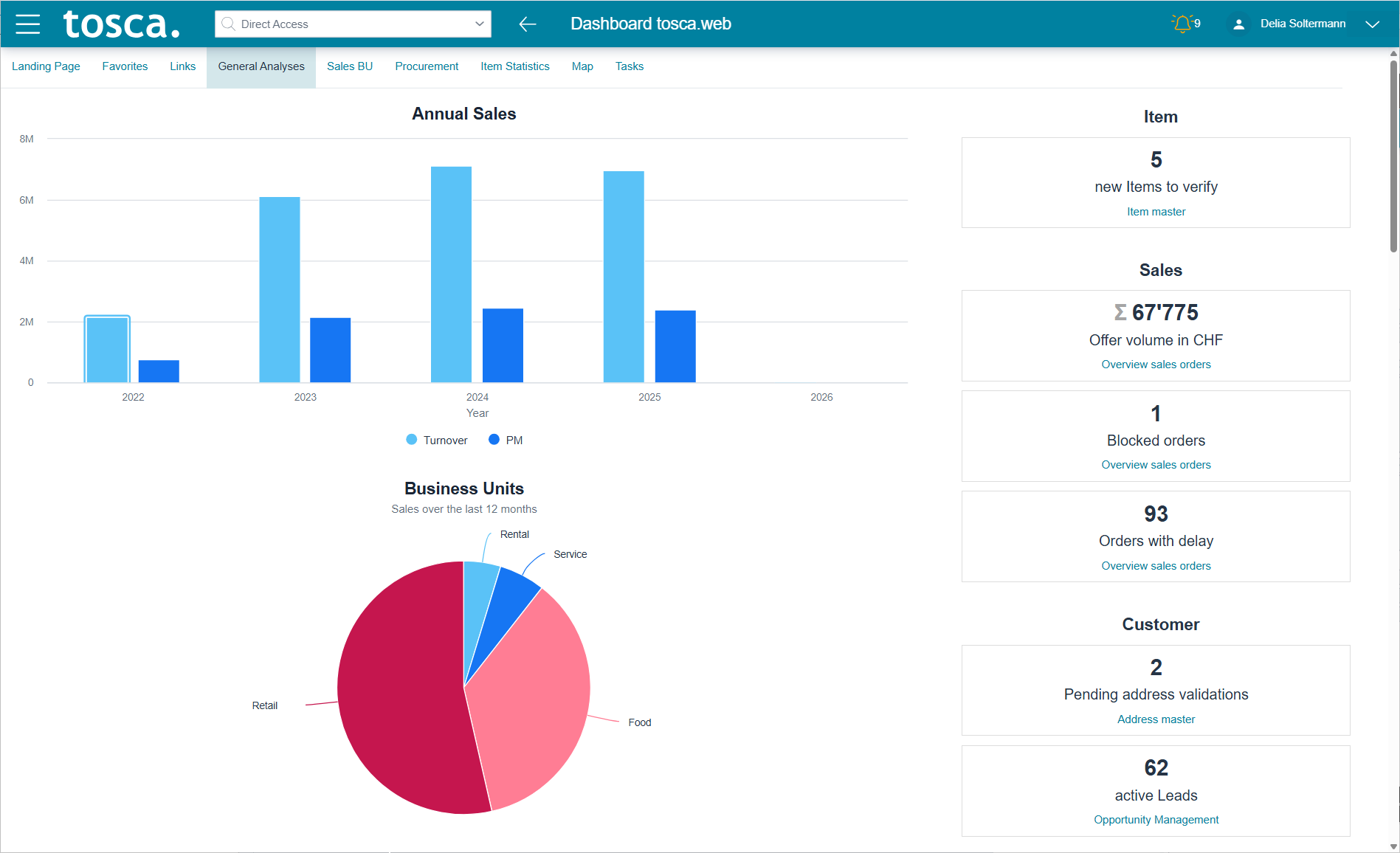
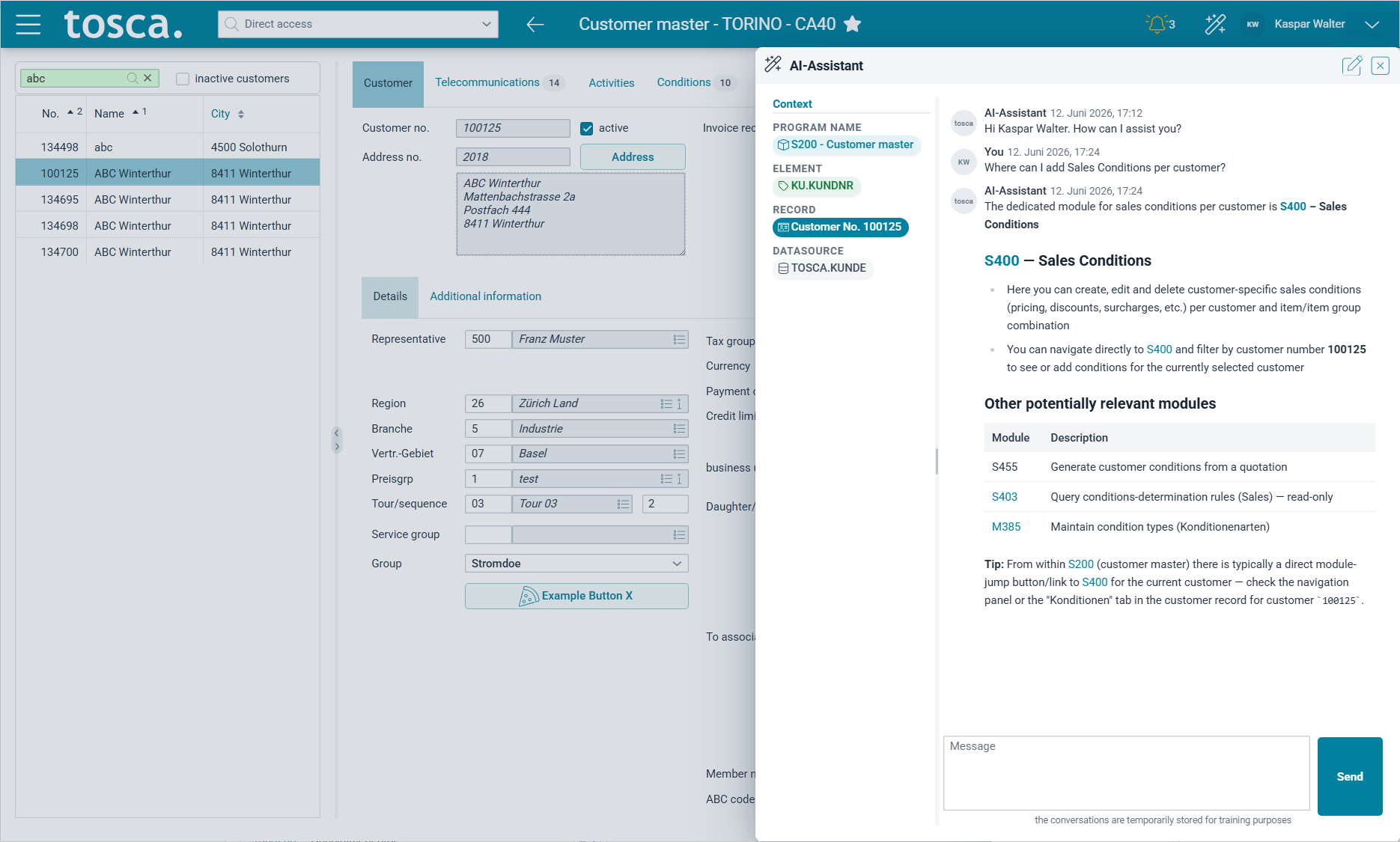 The modernization opened the door to new AI capabilities, including an assistant that helps users access ERP information and navigate workflows using natural language.
Notably, the rise of AI-assisted development has changed the calculus. Dynasoft now uses Claude Code with custom skills to help migrate large PL/SQL modules, generate package code, and prepare tests for its customers' individual modules. Walter estimates that, had the same AI tooling been available years earlier, the effort would have moved dramatically faster; humans still verify and tune the output, but the manual-labor portion of migration is far lighter.
The modernization has also opened doors that Oracle Forms never could. Dynasoft is now building an integrated AI assistant connected to its ERP knowledge base via MCP, giving users natural-language access to ERP information. The assistant even includes tools for customizing the UI definition directly — allowing project managers and power users at customer sites to adjust the interface without having to learn Dynasoft's complex internal module designer, and without breaking compatibility with the standard ERP release. The chat experience is built on the same components Dynasoft uses elsewhere, with plans to move it onto Vaadin's AI Orchestrator once that feature stabilizes.
Asked whether he'd choose the same stack again, Walter was clear: Spring Boot and Vaadin would remain the foundation. "I don't see a reason why not to go with Vaadin."
Choose the right modernization path for your application
Every legacy application is different. Whether you're evaluating a migration, rewrite, or gradual modernization strategy, our team can help you assess your options.