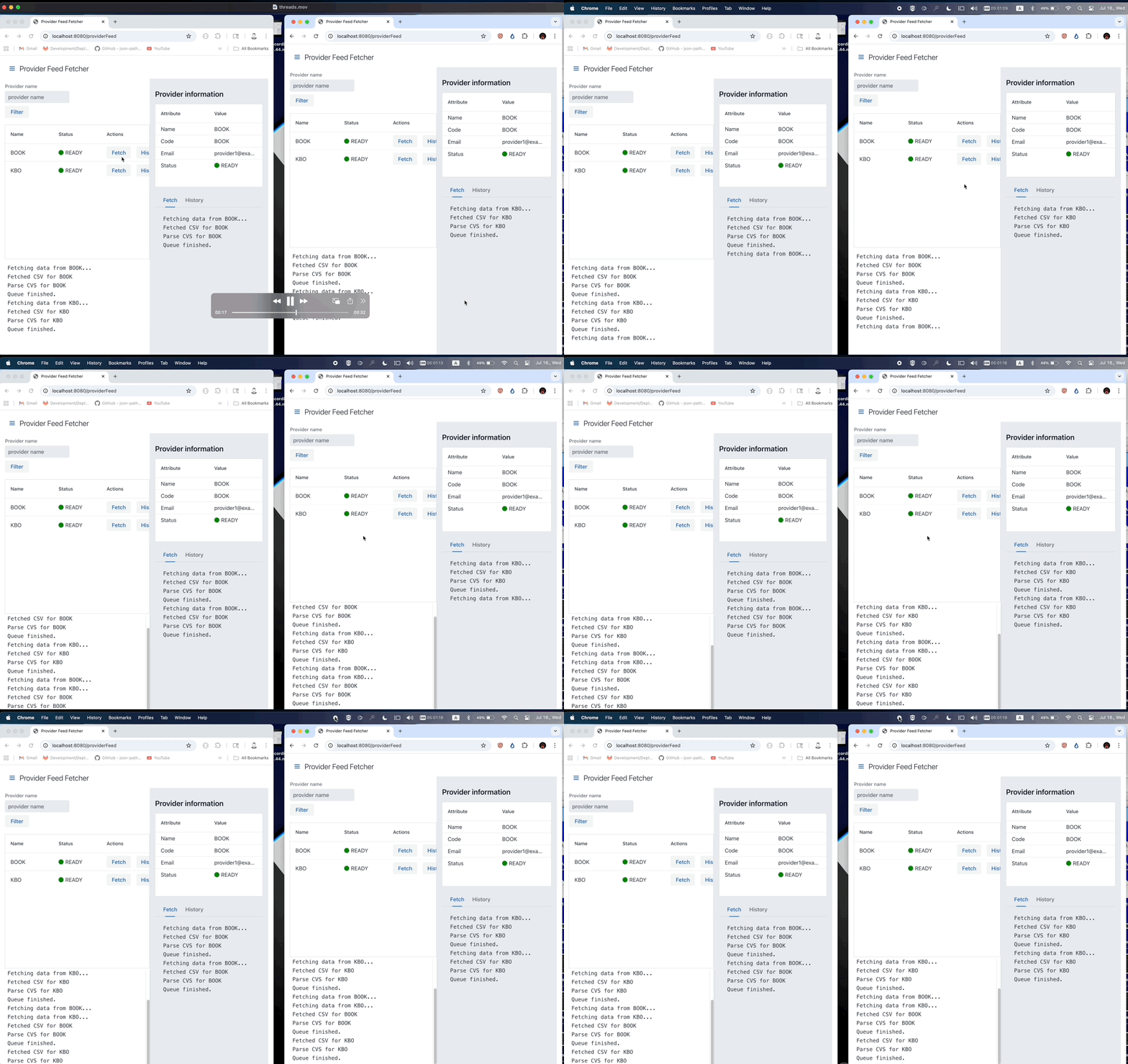
just sharing because you did a great job — Spring handles the ‘store’ updates via ApplicationEventPublisher events (from chained CompletableFutures from different verticles and spring services), and Vaadin updates the frontend through reactive effects. All built on Vaadin 24.8, result of the first week, great job :) , result is : common business logic but (partly) separated reactive views via UIScopes
AI generated quick summary
Technology Stack
- Java: JDK 21
- Spring Boot: Latest version
- Vaadin: 24.8.0 for the frontend UI
- Vert.x: 5.0.0 for asynchronous operations
Spring-Vaadin Integration
The application integrates Spring’s event system with Vaadin’s reactive UI components:
-
Spring Events: Used for system-level communication
- Leverages Spring’s dependency injection and event system
- Provides a decoupled way for components to communicate
-
Vaadin Signals: Used for UI-level reactivity
ListSignal<T>maintains collections of values that UI components can observeValueSignal<T>maintains single values that UI components can observe- Changes to signals automatically trigger UI updates
-
Integration Points:
- FetchStatusSignalUpdater: Bridges Spring events to Vaadin signals
- FetchStatusModel: Maintains Vaadin signals that UI components observe
- ProviderFeedFetcherView.subscribeToComponentEffects(): Sets up reactive UI updates
Event Flow
┌─────────┐     ┌─────────────┐     ┌───────────────┐     ┌─────────────────────┐
│  Vert.x │────▶│ CommandQueue│────▶│ApplicationEvent│────▶│FetchStatusSignalUpdater│
└─────────┘     └─────────────┘     │   Publisher   │     └─────────────────────┘
                                   └───────────────┘                │
                                                                    ▼
                                   ┌───────────────┐     ┌─────────────────┐
                                   │  Vaadin UI    │◀────│ FetchStatusModel│
                                   │  Components   │     └─────────────────┘
                                   └───────────────┘
- Vert.x provides asynchronous operations that trigger completion callbacks
- CommandQueue executes commands and publishes events through Spring’s
ApplicationEventPublisher - FetchStatusSignalUpdater listens for these events and updates the FetchStatusModel
- FetchStatusModel maintains state using Vaadin’s
ListSignal - UI components subscribe to changes in the model using Vaadin’s
ComponentEffect
Thread Safety and Memory Management
- Spring events are handled on the publishing thread
- Vaadin signals handle thread synchronization automatically
- Collections are protected with unmodifiable views
- No explicit caching that could lead to memory leaks
Best Practices Implemented
-
Separation of Concerns:
- Events (what happened)
- Commands (what to do)
- Models (state)
- Views (presentation)
-
Loose Coupling:
- Components communicate through events rather than direct method calls
- UI components observe models rather than models updating UI directly
-
Type Safety:
- Generic interfaces ensure type compatibility
- Strong typing of events and signals
-
Non-Blocking Operations:
- Vert.x operations avoid blocking the event loop
- Asynchronous callbacks handle operation completion
- CompletableFuture bridges reactive and imperative code
Conclusion
The Partner Location Feed Manager demonstrates a well-structured integration of Spring Boot, Vaadin, and Vert.x. The application leverages Vaadin’s reactive UI components and signals system to create a responsive user interface that automatically updates in response to backend events. The event-driven architecture, combined with the command pattern, provides a flexible and maintainable codebase that can be easily extended to support new providers and operations.